Posts

Showing posts with the label Humanities

Logan Square: Bonafide Gentrified

Image
For this first unit of our Humanities class this year, Journalism, we learned about the core values of journalism, how impactful news can be, and the different ways you can consume it smartly. We read the book Our America: Life and Death on the South Side of Chicago by LeAlan Jones and Lloyd Newman, and we attended several digital workshops from Northwestern Medill University on journalism. To show our understanding of the core values of journalism, we were tasked with writing a spot story about a topic of our choice based on small interviews we did earlier in the term, and my choice was to write a spot story about gentrification in Logan Square, the neighborhood I've lived in all my life. Below is that story. Ever since the year 2000, Logan Square (a small neighborhood on the Northwest side of Chicago) has faced continued gentrification accelerated by the popular 606 trail , conversions of historic multifamily units into single-family homes and new luxury developments near public ...

A Deal with Durbin

For this unit of our humanities class, Policy, we learned a lot about the process a bill has to go through before it becomes a complete law, as well as more about the history of the US's legal system. We ended up visiting the City Council on a Field Experience, through a Zoom call, and got to listen in on the proceedings there once more. For this Action Project, we were asked to select a bill or ordinance currently circulating through either our local government or the national government, and write a letter to our corresponding local representative to either vote for or against that bill. Below is the content of the letter that I plan on sending to Senator Durbin. ---------------------------------------------------------------------------------------------------------------------------------- WH 1535 N Dayton St, Chicago, IL 60642 7th May, 2020 Richard Durbin 524 Hart Senate Office Building Washington, DC 20510 (202) 224-2854 Dear Senator Durbin, Our world is slowly...

Ammendments: Reform or Refrain?

Image
In this second unit of our Humanities Class Argument, Abduction, we learned more about the Constitution of the United States, as well as the Declaration of Independence and the Bill of Rights. Our class went out on a Field Experience to the immigration courts downtown to get a better idea of the process, and we later watched the movie 13th by Ava DuVernay to see how the 13th Amendment to the constitution has impacted African Americans over time. For this Action Project, we had to take a look at our school's student handbook and argue for our own changes to be made to a specific part of it. Below is my argument on how our open campus policy should be changed to allow students more freedom. The Student Handbook describes important information about Global Citizenship Experience Lab School, including information regarding student conduct. While I do agree with the majority of the rules stated in the Handbook, there is a rule that I want to amend regarding the open campus policy. T...

Video Games As Art

Image
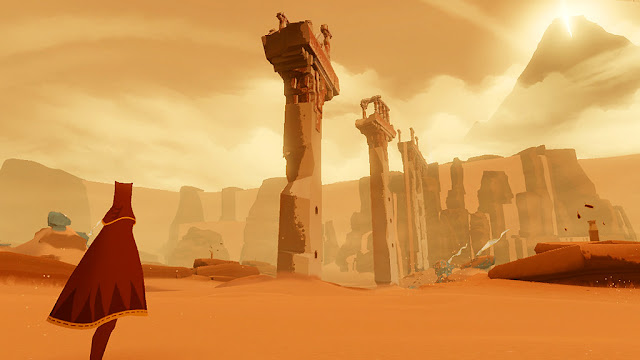
In this first unit of our Humanities class, named Argument, we learned more about how to make a proper argument by looking at the Declaration of Independence. We learned about concepts such as  syllogisms and inductive and deductive premises, and even got to go out and talk to Alderman Walter Burnett about Argument and the city government. For this Action Project, we had to declare our right to study a specific course of our own design. Below is my declaration to study Video Games as Art. A scene from the game Journey . Flickr, Playstation Europe, June 3rd 2010.  Topic: Video Games As Art Introduction:  I am creating this declaration to fight for a class based on learning about art through a modern, digital eye, through the context of games and the effects they have on people. It is necessary for me to write this declaration because I think that people should be able to learn in ways that relate to modern society. My official declaration is that people of my age,...

Addictive Gaming: Is It A Thing, Or Not?

Image
This second term of our Humanities class, Rhetoric, we learned more about how to compare modern problems to things that have happened in our past, and how to improve our rhetoric based on that. We also learned about op-eds, and how they're written. For this Action Project, we were tasked with writing our own version of an op-ed, and giving the reader a new perspective on a timely topic. Below is my own op-ed, along with an analysis of the op-ed. My op-ed uses my own experience as an addicted gamer to prove that I am a credible source, along with the various sources that I cite in the paper. It also uses rhetorical devices such as similies (like moths to a flame) and anaphora (repeating "that ___" in paragraph 3). I also gave a logical appeal at the end when I talk about how doctors would likely be flooded by over-concerned parents. My emotional appeal lies in how I mention how children especially should not be labeled as addicts at such a young age. https:/...

Our House Is On Fire

Image
This Humanities class is called Rhetoric, and during our first unit of this class, we learned about all the different rhetorical devices that go into making a message, including the three main appeals; the ethos (appeal to ethics), logos (appeal to logic), and pathos (appeal to emotion). We also watched the Democratic Primary Debate, and follow along with our certain candidate. I was given Kamala Harris as my candidate. For our Action Project for this unit, we were asked to make a little video speech from the perspective of our candidate from the debates, and answer a question that might be asked to them from their perspective. Below is my video speech. WH, Our House Is On Fire Speech , 2019 In conclusion, I thought that this Action Project was enjoyable to make, and an interesting experience to do overall. It was difficult, though, and hard to properly speak from the perspective of the candidate that we were given.

Was Walter Wrong?

For our third and final unit for our Humanities class, Drama, we discussed what a matriarch is, and we also talked about blockbusting, and the majority of our class time was spent reading the play A Raisin in the Sun . A matriarch is usually defined as someone who's mentally strong, and the head woman of the household. They're also usually seen as old and wise. For this AP, we were tasked with choosing a part of the play and a character from the play to write a commentary on. Below is the audio recording of my commentary, as well as a text transcript of the recording. In conclusion, I thought that this project was enjoyable, but I struggled a bit with the audio part of it. I'm not super comfortable with voice acting like that, for school projects especially, but I think I did pretty well on it despite that.

A Doll's House Gender Inequality

Image
In this second unit of our Humanities class, Drama, we read the play A Doll's House, and we also learned more about Victorian times and what it was like to live in them. For our Action project this unit, we had to make our own little play that connected to A Doll's House. Below is the filmed version of the play that we wrote, along with a transcript of the play. In conclusion, I thought that this Action Project was interesting and fun to do with a group, and I also liked how it connected with gender inequality.

The Taming of the Shrew Sonnet

Image
For this first unit of our Humanities class, Drama, we learned about plays, and the majority of our class was spent reading a Shakespearean play, specifically The Taming of the Shrew. It had some interesting views on gender roles throughout the play. This is especially true, given the time period it was written in, where women didn't have much power and were supposed to always be subservient to men. Women who defied those expectations were punished, usually until they changed their ways and became subservient. This play is a pretty accurate depiction of life during this time period, and Shakespeare was trying to make a statement that gender roles should be changed, to give the women more power in society. Kate and Petruchio's relationship is an example of what needed to change. Below is my Action Project, a Shakespearean sonnet that I wrote and recorded myself reading. Video: WH, Sonnet Video , 2019 Transcript of the sonnet: Good sir, you act as if thou art a ki...

Best or Banned?: The Outsiders

Image
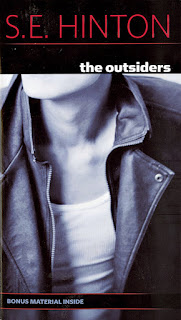
For this second unit of our Forbidden Books class, we learned more about books that were banned, but the main part of the unit was reading a book that had been banned for out Action Project on it, which is the paper you see below. We also went on Field Experiences to a mosque, or a Muslim place of worship, and to a feminist book store, to learn more about history and why books might be banned. Below is my paper that I wrote for my Action Project, as well as a picture of the book cover. Schoolastic, The Outsiders Book Cover , 2019 In conclusion, I thought that this project was really enjoyable to do, as well as being a good amount of challenging. I really enjoyed the book that I had to read for it, and the paper went together quite easily. 

Socratic Dialogue

Image
During this term for our Humanities class, Forbidden Books, we learned about Socrates and ancient Greece. We also learned about certain books, and the reasons that they were banned from places such as libraries and schools. We even read one of these books,  Fahrenheit 451 , which was a banned book at one point. For this Action Project, we were tasked with creating a video, based on a Socratic Dialogue between two characters with different opinions. One character convinces the other to their side, with a convincing argument. Below is the video that me and my partner, BA , filmed together. In conclusion, this project was difficult to finish, but was enjoyable to film and act out. It was also pretty easy to wing it and go off script with this project, but I think that we for the most part stayed on the script. I learned from this project on how to use lighting and framing effectively, and also how to use a script as a base and elaborate on top of it more in the actual recor...

No Peace With Hunger

“Becoming a Satyagraha” was the theme of our Action Project for this 3rd and final unit of our Humanities Global Peace class. We were tasked with identifying a problem in the world and then carrying out a nonviolent act of protest. I took on the issue of hunger, which connects with the Sustainable Development Goals that we’ve learned about throughout this year. Below is my paper on the topic, alongside a slideshow of images to accompany it. In conclusion, I found this project to be quite a challenge. It was pretty difficult to get done in time, because of the limited time frame, but I think that I did a pretty good job on it. I learned to sympathize with the homeless and hungry more, and even found a service hours opportunity at my local food pantry, just a block away.

Activist or Economist? Why Not Both?

For this second unit of our Humanities class, Global Peace, we learned about the principles of Mahatma Gandhi, and how activists use and follow them today. We also learned about types of violence and how they affect people and the system that we've put into place. For this Action Project, we were tasked with researching and creating a paper for an activist that follows Gandhi's principles. Below is my research paper. In conclusion, I thought that this was quite an interesting, yet challenging, project. The person that I researched was quite interesting to learn about. I also think that this project gave me a bit of insight into how economists and peace activists can connect and communicate, and how someone with the right motivation can change the world with their ideas.

Squirrel and Bear

Image
In this second unit of my Humanities Stories Class, we learned more about fables. Fables are stories with a moral at the end, usually conveyed through anthropomorphised animals or objects. For our FE, we went to the Field Museum to learn more about stories from Naitive American peoples. For this Action Project, we were tasked with writing our very own fable, as well as create a visual to go alongside it. Below is the fable that I wrote. Squirrel was on his way to school one day, carrying an acorn under his arm. It was a sunny day, but Squirrel was a bit gloomy because he had no one to look forward to seeing upon his arrival there. Squirrel thought to himself, pushing his glasses back up onto his nose, “I know I’ve always been the short, geeky type. I know I’m not strong physically, but at least I’m smart. So why won’t anyone want to be friends with me?”  As Squirrel walked through the halls of his large school, lost in thought, he accidentally ran into Bear. He let out a small...

Creation Story

Image
In this first unit of our Humanities class, Stories, we learned about grammar and a little bit about the history of words as well as various stories about the creation of the universe and Earth. Our AP for this unit was to write out our very own creation story. Below is my story, along with a drawing to go alongside it. Before all else, there was nothing except Him. The Him we speak of has no name, but He is that which came before all else, that which lives in the void, that which is able to exist before existence. He is that which creates and destroys, the one who lazily rules over his creations, like it’s just a hobby for him. He only has the name he calls himself by, with no true name. The void gives off a cold feeling, maybe something like the feeling of nothing being there or no one being there for you. The void wasn't very bright or colorful at all, so He decided to create the stars in the sky. How he created them is by taking space dust left over from that one time he ...

Solanum tuberosum. Or, rather, a potato.

Image
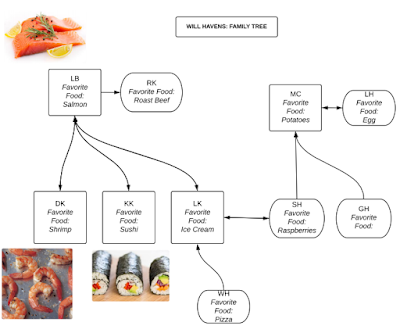
In this first unit for Food For Thought, we learned about the history of food, and how food has traveled across the world. For this Action Project, we were asked to take on the persona of a food from our families' history, and write an autobiography of sorts about it. I chose the potato. Below is the audio for my autobiography, as well as the presentation that goes along with it. I am the humble potato. Today, I am the 5th most important crop worldwide. I originated in South Peru, in the Andes Mountains. I was first domesticated by the pre-Inca people of the Andes about 8,000 years ago. I was an originally toxic plant, but over time Andean and European humans domesticated me so that I became harmless. The first Spaniards in the region—the group led by Francisco Pizarro, who landed in 1532—noticed Indians eating these strange, round objects and emulated them, often reluctantly. Within three decades, Spanish farmers as far away as the Canary Islands were exporting me to Franc...

Catching Dreams

Image
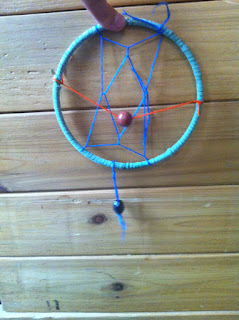
In this unit of our Who Am I? Humanities class, Doubt and Dream, we learned more about the underlying parts of the human consciousness, as described by Freud. For this action project, we were tasked with creating a dreamcatcher, similar to those made by certain Native American tribes. Below is a picture of mine, and a description of what it means to me. The center of my dreamcatcher was initially empty. I think that I was representing how my heart was not fulfilled, like I was missing something. But now, even if it seems more like an afterthought, there is something or someone filling that hole in my heart. Something has...changed, since I started making the dreamcatcher. I feel like something has changed in my life, so I changed the design of my dreamcatcher. Some positive elements that I want to reach me are things such as happiness, and love. I symbolized those positive elements through the color green. Green is usually seen as a positive color, a color of life and nature....

Philosophy Podcast

In my Who Am I? class, we've been learning about philosophy and philosophers, such as Plato, Socrates, and Aristotle, and have learned about their ideas of "reality" and "truth". For this action project, we were asked to make a podcast relating to what we believe in, and below is that podcast.

TRL Transformational Maps

Image
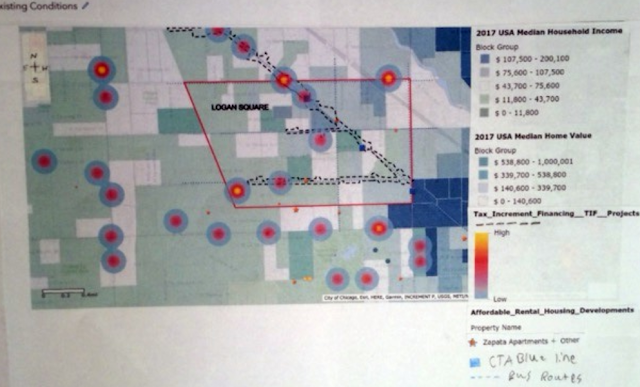
In our Humanities unit Thin Red Lines, we learned about making maps, cartography, and the meaning that maps have behind them. For our Action Project, we were asked to make maps of our own, making sure that they were transformational maps. We also had to write rationales for all of our maps, explaining the cartographic choices we made. Below are pictures of the transformational maps that I made, as well as the rationales that I made to go with them. The issue that this map addresses is gentrification in Logan Square.The boundaries of my map are: Diversey Ave, Bloomingdale Ave, Western Ave, and Pulaski Rd. Gentrification occurs when a neighborhood gets redeveloped and its housing prices go up, forcing lower-income residents out and moving more higher-income residents in. I chose to use warmer colors for the TIF project areas to make them pop out. I included several different categories onto my map. Those categories were: Mobility, demographic and housing profile, community history ...

Gender Equality

In this unit of our Humanities class we learned more about how the SDGs are problems that don't care about borders, and how we all need to work together to solve them. We also learned about how development and sustainability can be achieved at the same time. I took away from this project that gender equality is very important to several other major SDG goals, and that by solving the problem of gender inequality, it will make solving other SDGs much easier.