Posts

Hipped on Surgery

For our first unit of our STEAM class, Cure, we learned about cells and the human body, as well as quadratic formulas. For our FE for this unit, we went to the IMSS (International Museum of Surgical Science) to learn about early surgeries and how they did things back when they didn't have modern luxuries like anesthesia and painkillers. For this Action Project, we researched a specific surgery, and made a presentation on how it affects the body. Below is the slideshow that I've put together for my presentation on hip replacement surgery. In conclusion, I thought this project was interesting to research, and I also had personal ties to it, given that my grandmother on my mom's side recently went through the process of hip replacement surgery.

The Taming of the Shrew Sonnet

Image
For this first unit of our Humanities class, Drama, we learned about plays, and the majority of our class was spent reading a Shakespearean play, specifically The Taming of the Shrew. It had some interesting views on gender roles throughout the play. This is especially true, given the time period it was written in, where women didn't have much power and were supposed to always be subservient to men. Women who defied those expectations were punished, usually until they changed their ways and became subservient. This play is a pretty accurate depiction of life during this time period, and Shakespeare was trying to make a statement that gender roles should be changed, to give the women more power in society. Kate and Petruchio's relationship is an example of what needed to change. Below is my Action Project, a Shakespearean sonnet that I wrote and recorded myself reading. Video: WH, Sonnet Video , 2019 Transcript of the sonnet: Good sir, you act as if thou art a ki...

Best or Banned?: The Outsiders

Image
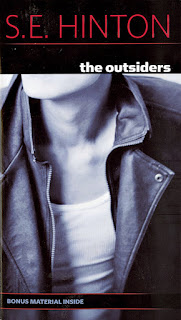
For this second unit of our Forbidden Books class, we learned more about books that were banned, but the main part of the unit was reading a book that had been banned for out Action Project on it, which is the paper you see below. We also went on Field Experiences to a mosque, or a Muslim place of worship, and to a feminist book store, to learn more about history and why books might be banned. Below is my paper that I wrote for my Action Project, as well as a picture of the book cover. Schoolastic, The Outsiders Book Cover , 2019 In conclusion, I thought that this project was really enjoyable to do, as well as being a good amount of challenging. I really enjoyed the book that I had to read for it, and the paper went together quite easily. 

DID I Do That?

Image
In this second unit of our STEAM class, Disease, we learned more about the human mind, and how mental disorders affect you mentally and physically. We learned about different kinds of brainwaves, neurotransmitters, and how the nervous system works. For this Action Project, we chose a particular mental disorder, and we had to make a lesson plan to teach our classmates about it as well. Below is my Action Project. Dissociative Identity Disorder, formerly know as Multiple Personality Disorder, affects the hippocampus and the amygdala, as well as the orbitofrontal cortex. This means that DID changes the way that a person’s memory works, as well as how their emotions and decision making work. The scientific definition states that DID “is characterized by a person's identity fragmentation into two or more distinct personality states. People with this condition are often victims of severe abuse.” My definition is that DID is where a person’s mind splits into different personalities in o...

Socratic Dialogue

Image
During this term for our Humanities class, Forbidden Books, we learned about Socrates and ancient Greece. We also learned about certain books, and the reasons that they were banned from places such as libraries and schools. We even read one of these books,  Fahrenheit 451 , which was a banned book at one point. For this Action Project, we were tasked with creating a video, based on a Socratic Dialogue between two characters with different opinions. One character convinces the other to their side, with a convincing argument. Below is the video that me and my partner, BA , filmed together. In conclusion, this project was difficult to finish, but was enjoyable to film and act out. It was also pretty easy to wing it and go off script with this project, but I think that we for the most part stayed on the script. I learned from this project on how to use lighting and framing effectively, and also how to use a script as a base and elaborate on top of it more in the actual recor...

Killer Cramps: Colon Cancer

Image
For this first unit of our STEAM course, Disease, we learned about the body's systems, and how diseases affect them. We read the book The Reason I Jump by Naoki Higashida, which is about a thirteen-year-old boy with autism. The boy is the author himself, and he gives us an inside look on the perspective of autistic people. For this action project, we were tasked with interviewing someone we know with firsthand or secondhand experience with a disease, and then research that disease and how it affects the body. Below is my Action Project. Cancer occurs when healthy cells develop errors in their genetic blueprint: the DNA. Healthy cells grow and divide in an orderly way to keep your body functioning normally. When a cell's DNA is damaged and becomes cancerous, cells continue to divide — even when new cells aren't needed. As the cells accumulate, they form a tumor, which can be very deadly if not monitored or treated. Cancer is not a contagious disease because it only affect...

BioBag or Bust

In this final unit of our STEAM class, Biomimicry, we learned about how to look at decomposers such as fungi and worms for inspiration for improving a product. The purpose of this Action Project was to draw inspiration from nature to create a closed-loop system for a product that people use in their daily lives. Below is my slideshow on the topic. In conclusion, this project was an interesting and challenging project. I learned that we make far more waste in our daily lives than we probably think we do, and that we need to be careful with how much we consume and waste.